Spring Sprinkler Startups
Opening a system fast is how a winter split becomes a flooded lawn. The pressure has to come up slowly enough that you find the damage instead of announcing it.
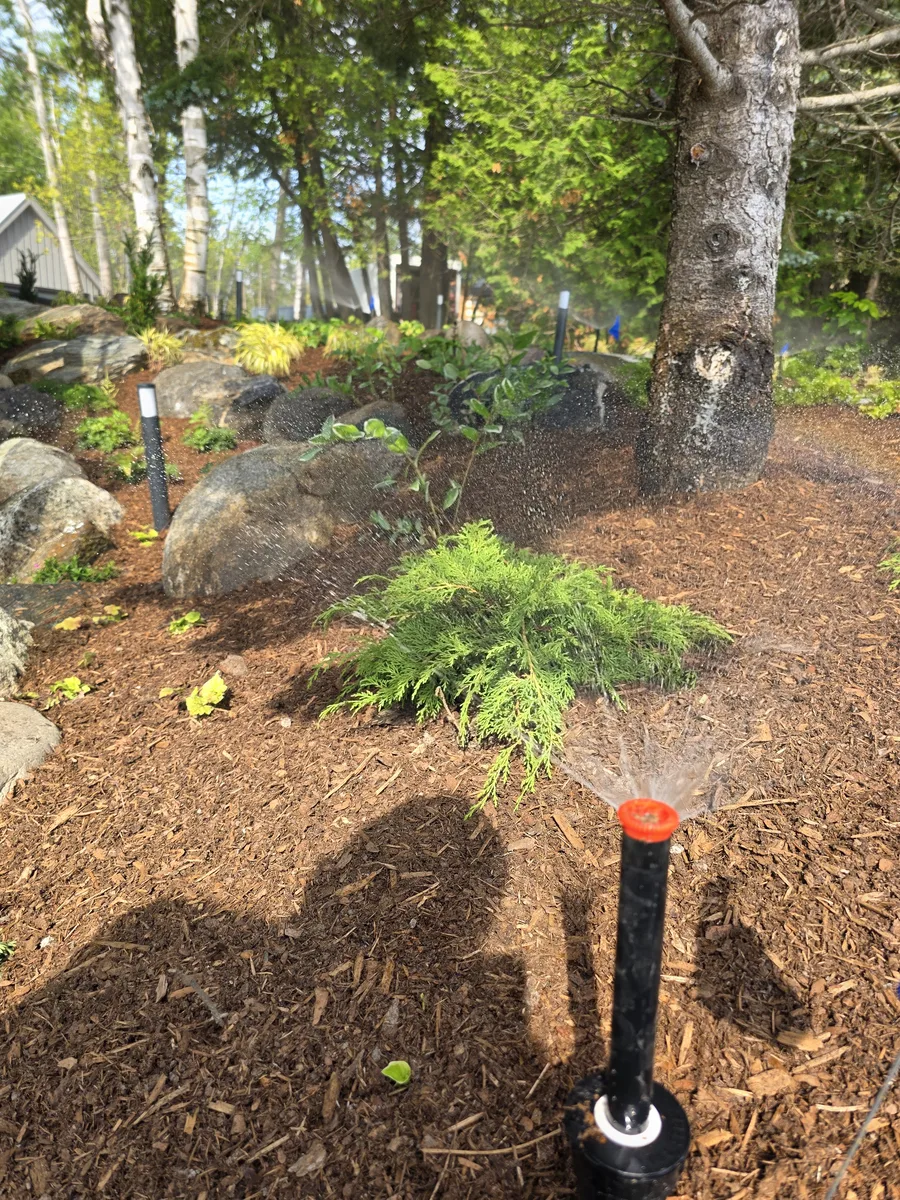
A startup is two jobs in one visit
The system gets brought back into service, and it gets inspected while that happens. Skipping the second half is how a system runs all summer with one head watering the driveway and a zone that never comes on, and nobody notices until the water bill arrives.
Charging the system slowly
The supply is opened gradually rather than all at once. Water moving into an empty line at full pressure arrives at every fitting and at the last head on the run as a shock, and a joint that survived the winter can fail right there. Filling slowly also lets the air out ahead of the water instead of trapping it in the line.
Once the lines are full, the backflow assembly is put back into service and watched for weeping, and the controller is powered up and its clock and date set. A controller that lost power over the winter often comes back on a factory default schedule rather than the one it finished the season with.
Zone by zone, head by head
- Every zone is run while somebody watches it. That is the only way a dead zone or a broken head is found.
- Heads are checked for winter damage: clipped by a plough, pushed over by frost, or sunk below grade as the ground settled.
- Spray patterns are re-aimed where they have drifted onto a driveway, a wall or the road.
- Nozzles blocked by grit that worked its way in over winter get cleared.
- Anything found is reported before it is fixed, with what it is and what it takes to put right.
The schedule is reset, not resumed
A controller left on last August's programme will drown a lawn through a cold, wet May. Spring watering is shorter and less frequent than midsummer watering, and beds never wanted the same amount as lawn in the first place. The schedule gets set for the season the lawn is actually in.
If it never got blown out
Say so when you book. A system that went into winter with water still in it gets opened more carefully again, because any splits are already there and pressurising it hard just finds them the expensive way. A fall blowout is what prevents that, and the startup visit is the natural moment to get on the autumn list.
Spring startups, asked and answered
When should the system be started up?
Once the ground has thawed and hard overnight frost has passed. There is no advantage in being first: a system charged before the last freeze can be damaged by it. The high ground around Orangeville runs later than the shoreline, so the date is not the same across the service area.
Can I start it up myself?
You can open the valve. What is harder alone is watching every zone run and reading what each head is doing while it does. A fault found in April is a small repair. The same fault found in July is a dead patch of lawn.
My system was not winterized. What now?
Book the startup and say so. It gets opened slowly and checked for splits rather than pressurised and hoped for. Freeze damage usually shows at the backflow, the valves and the heads before it shows in the buried lines.
Do you start up systems you did not install?
Yes. A good share of the work is on other people's systems, sometimes with no record of where the valve boxes are. Finding them is often the first task.