Planting and Garden Beds
Most plants that fail were not badly chosen. They were badly planted, or planted somewhere the water does not reach.
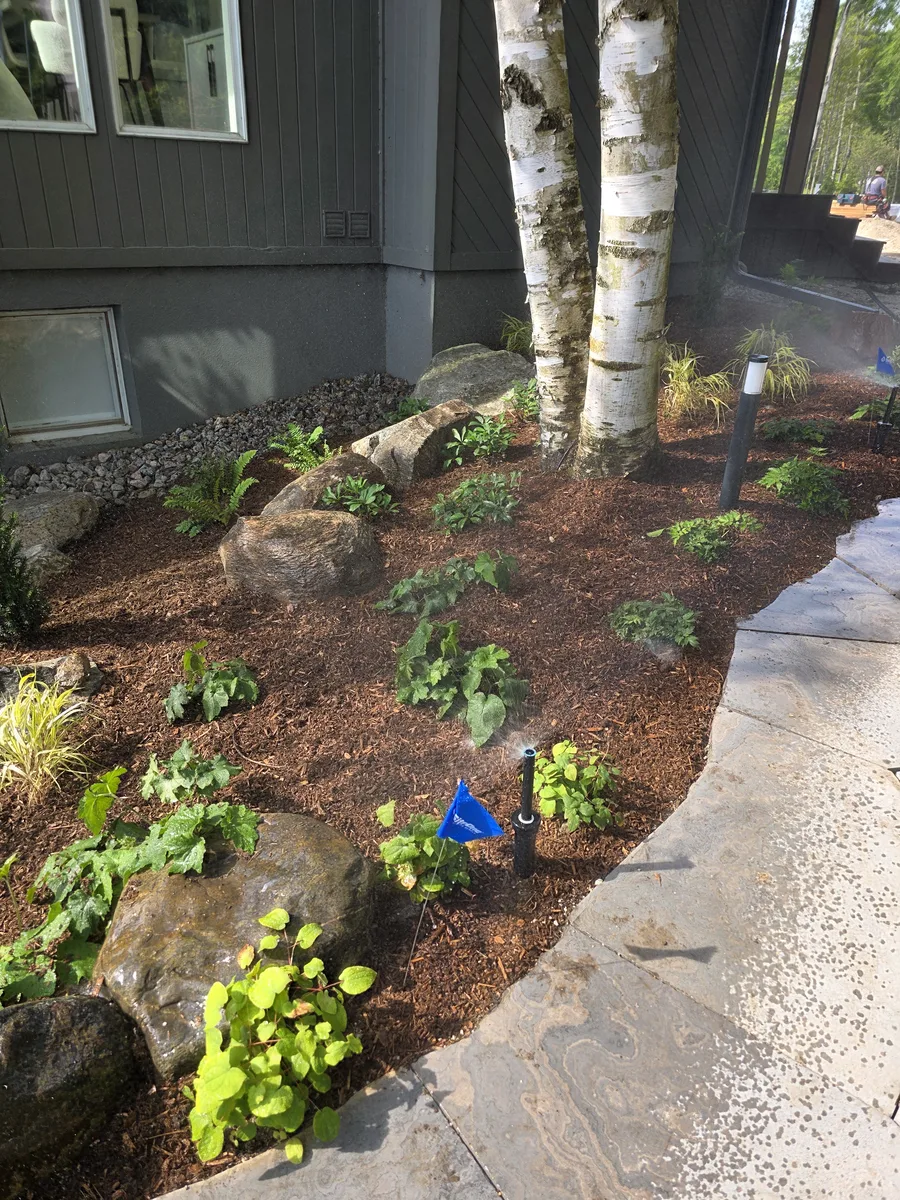
Bed preparation
Beds get dug over and amended rather than having plants dropped into holes in existing ground. Where a bed sits against a house or a hard edge, the level is set so water drains away from the structure. Edges are cut clean so the bed keeps its shape instead of creeping into the lawn every season.
Planting
Trees and shrubs go in at the depth they were grown at, not deeper — planting too deep is the single most common reason a young tree sulks for years and then dies. Root balls are teased out where they have circled the pot, backfill is firmed rather than packed, and everything gets watered in properly on the day.
Mulch finishes the bed and does real work: it holds moisture, keeps the soil temperature steadier, and suppresses weeds. It is kept back off the stems rather than piled against them.
Beds and irrigation together
If the property has a sprinkler system, beds and lawn should not be on the same zone. Where we are doing both, the bed planting and the irrigation get planned together, which is easier and cheaper than retrofitting drip into a finished bed later. On a yard being built from the ground up, that planning is part of the landscape installation rather than a separate visit.
Planting & beds, asked and answered
Do you supply the plants?
Yes, and you are welcome to be involved in choosing them. What suits the spot depends on sun, exposure and how wet the ground stays, so it is worth deciding on site.
When is the best time to plant?
Spring and early autumn are the kindest. Summer planting works but the watering commitment through the first weeks is significantly higher.
Can beds be watered by the sprinkler system?
They should be, but on their own zone. Beds and lawn want different amounts of water, and drip or micro-spray suits a bed far better than lawn heads do.