What an Inground Sprinkler System Actually Is
An inground sprinkler system is more than a hose that never gets put away. It is a layout of buried pipe, heads, valves and a controller, and the zoning is what decides whether it waters well or just waters everything the same.
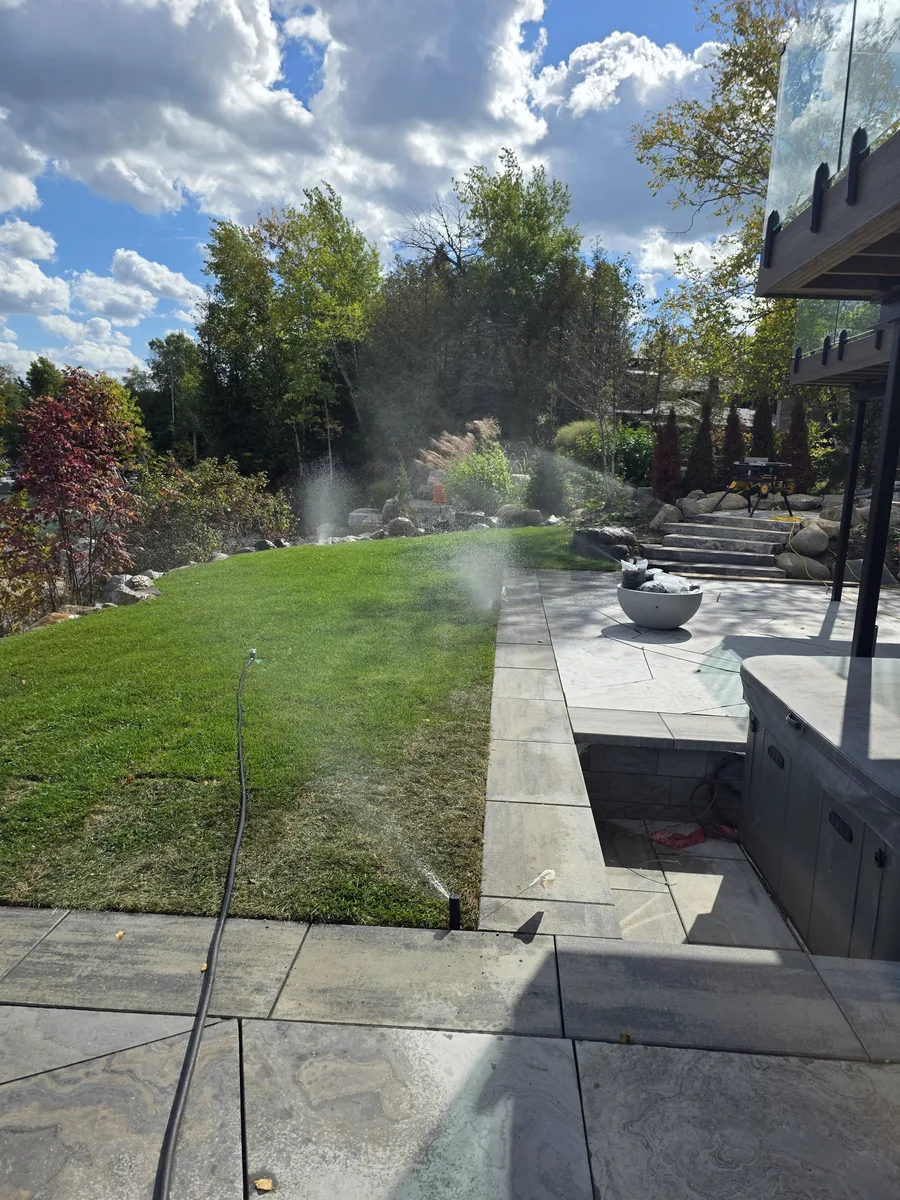
What is actually in the ground
An inground sprinkler system is a network of buried pipe, a set of pop-up heads, and one or more valves, all run by a controller that turns each section on and off on its own schedule. Drag out a hose-end sprinkler and you are watering by hand with extra steps. An inground system replaces that hand-watering with a fixed layout designed once and then run automatically.
Nothing about that description tells you whether a given system is any good. The pipe, the heads and the valves are commodity parts. What separates a system that runs quietly for years from one that fights you every summer is how those parts were divided up and matched to the lawn, which is the part most homeowners never actually see.
Zones are the design, not an accessory
A zone is not a shape drawn on a map of the yard. It is a group of heads that all want the same amount of water for the same length of time. Open lawn in full sun does not belong on the same zone as a shaded bed under mature trees, and grass on sand does not belong on the same zone as grass on heavier clay. Get the zoning wrong and the schedule that suits one zone drowns or starves every other one sharing it.
That zoning decision, plus how the heads are chosen and placed so their patterns overlap instead of leaving dry gaps between them, is what a sprinkler system installer is actually being paid to work out. The trench work and the pipe are the easy part.
Valves, wiring and the controller
Heads on the same zone share one valve, and the valve is what the controller is actually switching. Grouping valves where they can be reached again matters as much as where they sit today, because a valve nobody can find is a valve nobody can service. Low-voltage wire runs from each valve back to the controller, which is the box that holds the schedule, not a switch that turns the whole system on at once.
A schedule set correctly for one season can be wrong for the next. A wet, cool spring wants shorter, less frequent cycles than a dry August, and a bed on drip wants a completely different programme from lawn on rotors sharing the same box. The schedule is a setting that needs revisiting through the year, not a factory default left untouched.
What is buried, and why that matters every winter
Once the trench closes over, only the heads show. The pipe, the valves and the wiring all sit below grade, which is exactly why water left standing in a line in October becomes a cracked pipe or a split valve body by April. Water expands when it freezes, and a buried system has nowhere for that expansion to go.
That is the reason an inground system runs on a yearly cycle rather than a single summer. A fall blowout clears the lines with compressed air before the freeze, and a spring startup brings the system back into service slowly and checks every zone for winter damage before the season starts. Skipping either one is how a buried fault turns into a wet lawn nobody can explain.
The ground under your lawn decides more than the layout on paper
Two lawns the same size can need two different designs. Sandy ground drains fast enough that a long weekly soak mostly ends up below the roots, while heavier ground holds water long enough that the same schedule leaves the surface wet and the roots shallow. In Collingwood that difference can show up between one street and the next, which is why sprinkler system installation in Collingwood covers the town's ground and season in more detail than a general page can.
None of that is decided from a browser. A design that actually matches a lawn comes from walking the property, seeing what is sun and what is shade, and checking what the water source can deliver. That is what a free quote is for.
Asked and answered
What is the difference between an inground sprinkler system and a hose-end sprinkler?
A hose-end sprinkler is moved and turned on by hand every time the lawn needs water. An inground system is a fixed layout of buried pipe, heads and valves that runs on a schedule set in a controller, so the watering happens whether or not anyone is home to do it.
How many zones does a typical yard need?
It depends on the size of the property, how much is lawn versus beds, and how much sun each part gets. A small, uniform lawn might run on one or two zones. A property with lawn, shaded beds and a sunny slope usually needs more. The number comes from walking the property, not from a rule of thumb.
Does an inground system need attention over the winter?
Yes. Water left in a buried line freezes and splits whatever is holding it, which is why a system gets a compressed-air blowout before the ground freezes and a startup in spring that checks every zone before the season begins.
Can a system be added to a lawn that already exists?
Yes. Lines are pulled through established turf wherever the ground allows rather than opened as a trench, and the layout is planned around beds, trees and anything already finished on the property.